CQ180
The R.E.C.E.I.V.E.
Leadership System
(Virtual or In-Person Half-Day Training)
Close the communication gap creating conflict, burnout, disengagement, and resignation risk.

Your Team Is Not the Problem. The Communication Gap Is.
When companies scale, pressure exposes what strategy alone cannot fix.
Leaders start moving faster, and managers start reacting from frustration.
High performers start to feel misunderstood, and teams misread urgency, feedback, tone, and intent.
Execution slows because people are no longer receiving information in a way they can trust, process, and act on.
That is where conflict begins.
Not because people are incapable or broken or because your leaders do not care.
It's because communication is being delivered from preference instead of being received through understanding.
CQ180 closes that gap.
Book a Discovery CallTrusted by leaders and teams across industries

CQ180 Helps Organizations Solve:
1. Leadership Friction
When leaders communicate from their preference, they unintentionally trigger the people they need to influence.
CQ180 helps leaders understand why certain people frustrate them, why certain conversations keep breaking down, and how to adjust their communication style without losing authority.
2. Team Conflict
Most team conflict is not about the issue on the table. It is about how people process information, make decisions, handle urgency, build trust, and respond under pressure.
CQ180 gives teams a shared language to name the friction without making it personal.
3. Manager and Employee Misalignment
Managers often assume their team members are resistant, disengaged, or purposely underperforming.
Employees often assume their managers do not care, do not listen, or do not respect them.
CQ180 helps both sides understand what is actually happening beneath the surface and how to communicate to create clarity rather than conflict.
4. Breakdown in Executive Communication
At the executive level, communication mismatch becomes costly.
-Decisions stall.
-Strategies get diluted.
-Teams move in different directions.
-People protect their territory instead of solving problems.
-Critical feedback isn't shared.
-Trust erodes quietly.
CQ180 helps executive teams communicate across speed, detail, connection, and process, enabling better decisions faster.
5. Retention of Personnel
People rarely leave after one bad conversation.
They leave after repeated moments of feeling unseen, dismissed, misunderstood, or constantly misread.
CQ180 helps leaders catch communication breakdowns before they become disengagement, resentment, or resignation.
The CQ180 Framework
A 180-Degree Shift in How Leaders Lead.
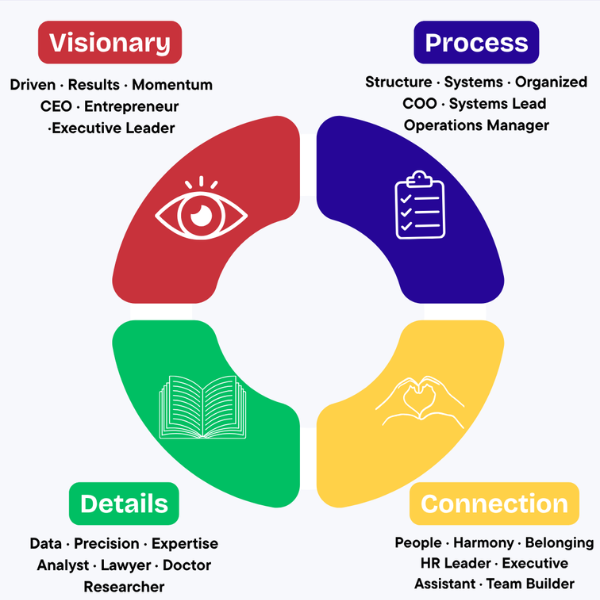
The CQ180 system teaches leaders to:
IDENTIFY their own dominant communication style and understand how it lands on the people around them.
READ the communication style of the people they lead, including what triggers them, what drives them, and how they process information before they can act.
BRIDGE the gap, using a precise, repeatable methodology that turns friction into forward motion.
CQ180 is built around the R.E.C.E.I.V.E. Leadership System:
-
Recognize your default communication pattern.
-
Evaluate how others receive information.
-
Calibrate the message before delivering it.
-
Engage through their reception style.
-
Influence without triggering unnecessary resistance.
-
Validate what matters without abandoning the standard.
-
Execute with less friction.
This is not another personality test, sales script, or generic communication workshop.
It is a leadership operating system for reducing conflict, restoring trust, improving engagement, and helping teams execute under pressure.
Book a Discovery Call
Why CQ180 Works So Quickly
Most communication training teaches leaders what to say.
CQ180 teaches leaders how to make sure the message is received.
Most personality tools stop at self-awareness.
CQ180 turns awareness into behavior change, leadership influence, and execution.
Most leadership programs assume leaders are rational under pressure.
CQ180 accounts for what actually happens in real workplaces: people get triggered, misread each other, defend themselves, shut down, overexplain, avoid, fight, leave, or withdraw.
CQ180 gives leaders a practical way to interrupt that cycle.
The Results Our Clients Are Seeing
Less Frustration.
Leaders stop taking every communication difference personally.
They begin to understand why certain people trigger them, why certain conversations break down, and what the other person needs in order to receive the message.
That alone reduces emotional reactivity.
How CQ180 Works
Phase 1: Recognize - Leaders begin by recognizing their own default communication habits, leadership patterns, and pressure responses.
They identify what they naturally prioritize, how they tend to deliver direction or feedback, and which communication behaviors create frustration or resistance in them.
This creates immediate self-awareness without turning the process into a personality label.
Phase 2: Evaluate - Leaders learn to evaluate the communication preferences of the people they lead, manage, and influence.
Instead of guessing, judging, or reacting, they begin noticing how others process information, interpret urgency, respond to feedback, build trust, and make decisions under pressure.
This creates immediate clarity.
Phase 3: Calibrate - Leaders learn how to adjust the delivery of their message before they begin the conversation.
This is where the 180-degree shift happens.
Instead of asking, “How do I communicate?” leaders learn to ask, “How does this person need to receive the message in order to trust it, process it, and act on it?”
This creates immediate alignment.
Phase 4: Engage - Leaders learn how to enter conversations in a way that lowers defensiveness and increases receptivity.
They stop relying on habit, force, avoidance, or over-explanation and begin creating the conditions for people to actually hear what is being communicated.
This creates immediate trust.
Phase 5: Influence - Leaders learn how to guide decisions, accountability, feedback, and change without triggering unnecessary resistance.
Influence is not manipulation. It is the ability to communicate in a way that helps people understand what matters, why it matters, and what needs to happen next.
This creates immediate movement.
Phase 6: Validate - Leaders learn how to acknowledge what matters to the receiver without abandoning the standard, decision, or business objective.
Validation doesn't always mean agreement.
It means the leader understands what the other person needs in order to feel clear enough, respected enough, and steady enough to move forward.
This creates immediate credibility.
Phase 7: Execute - The final goal is execution with less friction.
CQ180 helps teams stop wasting energy on constant, preventable communication breakdowns that slow decisions, damage trust, and drain momentum.
This creates measurable leadership effectiveness.
Book a Discovery Call
Ready to Reduce Conflict and Strengthen Leadership Effectiveness?
Your people do not need another personality label.
Your leaders do not need another one-size-fits-all communication workshop.
Your organization needs a practical leadership system that shows where communication breaks down, why people stop receiving the message, and how to recalibrate before frustration becomes conflict, disengagement, or resignation.
CQ180 gives leaders that system.
Close the communication gap before it becomes conflict, burnout, or resignation.

CQ180 is the best investment I've made in shifting how my team works together.
Before CQ180, I managed my teams the same way regardless of who I was talking to. The results were inconsistent, and some conversations escalated in ways I never intended. Once I decoded my own communication style and mapped my team's, everything shifted. The change was immediate and measurable: engagement went up, friction went down, and my stress and frustration went down as well.
The most defining moment came recently: for the first time in my 30-year professional career, I scripted a high-stakes conversation before the meeting. I was navigating a critical situation with a key leader I could not afford to lose. CQ180 gave me the necessary personal insight to guide that conversation to an outcome that worked for both of us.
An outcome that was unlikely if I employed my previous methods. She's still a productive member of the team with an elevated sense of ownership of her responsibilities, and is grateful for the performance feedback. Leading people is never simple. But CQ180 is, and that's what makes it powerful.
Tom Kuhar, CEO First Command Educational Foundation
For six years, it felt like we had never actually communicated. Then CQ180 changed everything in a blink.
Before CQ180, I prepared for meetings based on what I would need. I didn’t realize my leaders and my team needed something completely different. I’m a Visionary style, and when I learned my two most senior leaders were Process-driven and Detail-driven, it hit me: our needs were night and day different. I had never given them the information they wanted, even though they were begging for it.
After Saturday’s training, I made changes to my Monday brief. My leaders were engaged and excited, whereas it normally felt like we were pulling teeth. For the first time in six years, it felt like we had actually communicated.
The biggest transformation was with my team. They were burning out. CQ180 helped me see that I had very high standards, but I wasn’t giving them what they needed to meet them.
Once I learned their styles, the whole dynamic changed. People who had told me, “I’m out of here,” now say, “I’m really, really hoping you let me stay.” Even as a certified D.I.S.C. practitioner, CQ180 is unlike anything else on the market. It's given me a totally different experience in the same job.
Lisa Panagos, Director, Payroll Shared Services
CQ180 is a game-changer and is the quantum leap I was looking for.
Before CQ180, my knee-jerk reaction was, “I’m a Visionary!” My office is red, I’m a red (Visionary). But after peeling back the layers with the system, I realized I’m a Process/Details-oriented leader. I had spent most of my career surrounding myself with people who were just like me and alienating those who weren’t.
CQ180 was eye-opening because it showed me the traits of leaders who are my opposites, Visionaries and Connectors. Now I realize how important those people are. They highlight my blind spots, and that’s exactly the insight I need today.
A lot of times, high achievers feel like if there’s a problem, we can just throw money at it. But if you don’t get to the core of the problem, you’re just going to bleed through money.
CQ180 is a game-changer. If you’re at a crossroads, if you’ve plateaued, if you keep thinking, “If I can just work harder, I’ll get it,” this training shows you that working harder is not enough. It requires thinking outside the box, and quantum leaps, and CQ180 was exactly the quantum leap I was looking for.
As a Customer Service expert, when things go wrong, I'm the first to say, "Yo, that was the worst!" And it's equally important when things go right to praise, appease, and adulate, so kudos to Christy and what she developed.
Wess Walters, CEO Wess WaltersCX
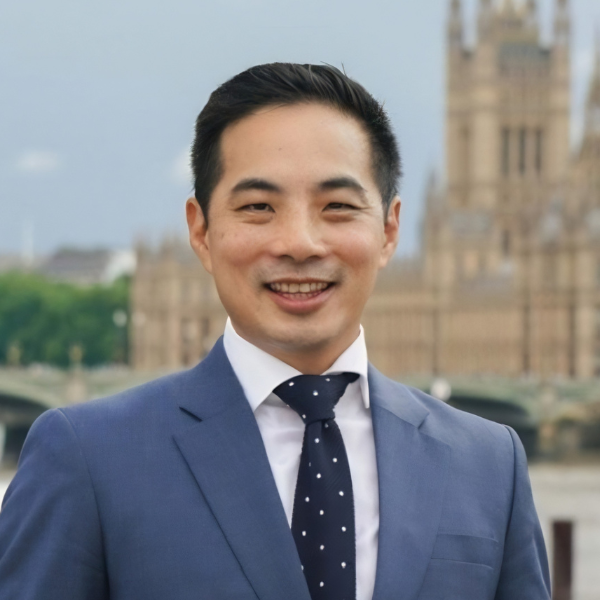
20 years of training said I knew myself. CQ180 flipped it on its head, unearthing my true Superpower.
While I'm grateful to all the institutions that helped me get here, with the Royal Navy being the biggest. To make it through the training and to qualify and maintain rank, you become indoctrinated in a certain way. You learn to follow the Process, set the Vision, and realize that Vision.
So when I came to CQ180, I thought, “Why am I even doing this? I know what I am.” But boy, was I surprised. CQ180 challenged my assumptions and deeply rooted beliefs. It helped me unearth what I truly am and the potential I have to offer the world as a Details and Connection-oriented leader.
Before, I was “faking it till I make it,” presenting what I believed were my core personality strengths and suppressing what was truly within me. When I finally realized I was the opposite and let that flourish, I began showing up differently.
You only have to look at the evidence: my new network, the speaking gigs, and the articles I’ve been asked to contribute to. People sense my authenticity, and my results continue to scale in ways I never thought were possible.
Nelson McMillan, Commander, British Royal Navy

CQ180 showed me the blind spot that was shaping how I led, coached, and managed teams.
As an HR professional and StrengthsFinder practitioner, I thought I already understood people. Behavioral norms, psychology, and influence are hard-lined into my profession, so when Christy introduced Communication Intelligence, I thought, “Girl, I don’t need that. That’s what I do for a living.” But CQ180 was different.
It helped me realize I’m Process-driven and Visionary, not Connection-driven, like I thought. The biggest unlock was seeing how often I focused on the mission, the deadline, and the process without fully considering what the people around me needed to run fast with me.
For HR leaders, this matters. We are often responsible for solving burnout, disengagement, toxic team dynamics, executive dysfunction, and turnover. CQ180 gave me a practical language for those challenges. It helped me understand what I need, what others need from me, and how teams can stop seeing each other as obstacles and start seeing each other as assets.
This is powerful for leaders, HR teams, and executive teams who want to win without burnout or dysfunction. And the best part of all, it works FAST!
Olivia Grant-Cream, Fractional CHRO, Board Member, Veteran
We Can't Wait to Work With You
Organization - Book a Discovery Call